What should be in a home medicine cabinet?
Learn what essential medications and supplies should be in every family's home medicine cabinet.
- First aid
On this page
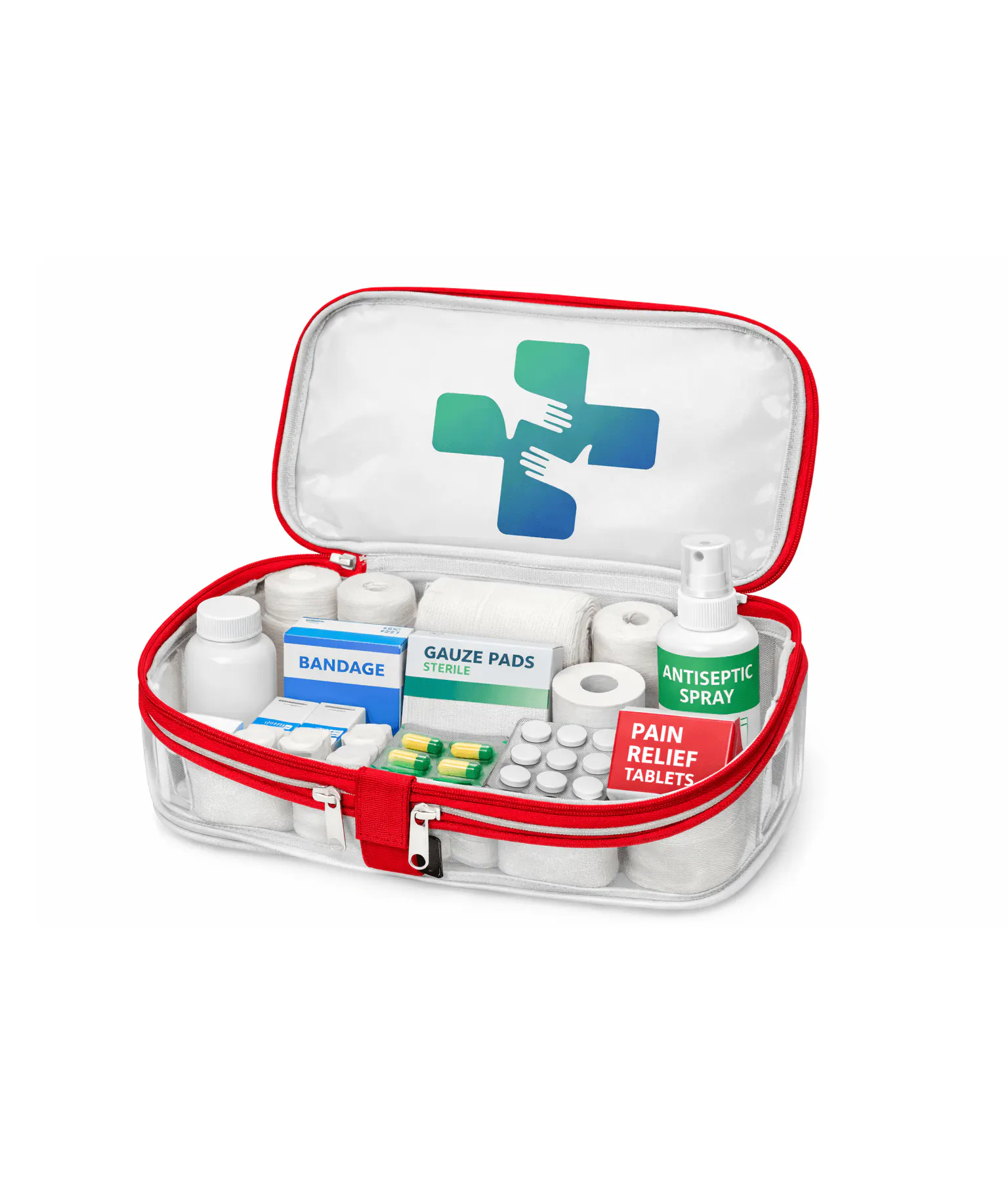
A home first aid kit is a must-have for every family. It helps quickly respond to minor injuries, cuts, burns, and other minor health issues before seeking professional medical attention.
Basic first aid supplies
It is recommended to have the following items in your home medicine cabinet.
- Thermometer
- Sterile dressings
- Cotton wool or sterile gauze
- Adhesive plaster
- Elastic bandage
- Scissors
- Disposable gloves
- Antiseptics for wound treatment
- Cold compress or ice pack
Important steps to provide first aid
In case of minor injuries, it is important to stay calm and follow safety precautions.
Cut or scratch
- Wash your hands.
- Rinse the wound with clean water.
- Use antiseptic.
- If necessary, cover the wound with a sterile bandage.
Burns
- Hold the burned area under cool running water for 10-20 minutes.
- Do not use creams or oils of unknown origin.
- If necessary, consult your doctor.
Bleeding
- Apply a pressure bandage with a clean cloth to the wound.
- Elevate the injured area if possible.
- If bleeding does not stop, seek emergency medical attention immediately.
What medications can you keep at home?
The following medications, recommended by a doctor or pharmacist, can often be found in a home medicine cabinet.
- Antipyretics
- Painkillers
- Some medications used for allergies
- Medicines prescribed individually for regular use.
It is important to store all medications according to the instructions and adhere to expiration dates.
Rules for storing first aid kits
- Store in a cool, dry place.
- Keep away from direct sunlight.
- Keep out of reach of children.
- Check contents and expiration dates regularly.
More articles
Health and wellbeing
Probiotics with antibiotics: when they help and how to take them
When antibiotics are really needed, why they cause diarrhoea, which probiotics have the best evidence (S. boulardii, L. rhamnosus GG) and how many hours after the antibiotic to take Linex, Enterol or Enterogermina.
Child Care
Ear pain in children: what to do at night and when to see a doctor
Why a child's ear hurts, what to do right now and at night, when ear drops are safe, whether an ear infection needs antibiotics, what not to do and when to get help urgently.

Cold & Flu
Antivirals for flu: what actually works
Which flu antivirals have strong evidence and which don't: a comparison table on Tamiflu (oseltamivir), Arbidol, Ingavirin, Kagocel, Ergoferon and interferons, who should see a doctor on day one, and what helps everyone.