Cold and flu: what to keep in your home medicine cabinet
How a cold differs from flu, what to keep at home and when it's time to see a doctor.
- Boosting immunity
- First aid
- Cold and Flu
On this page
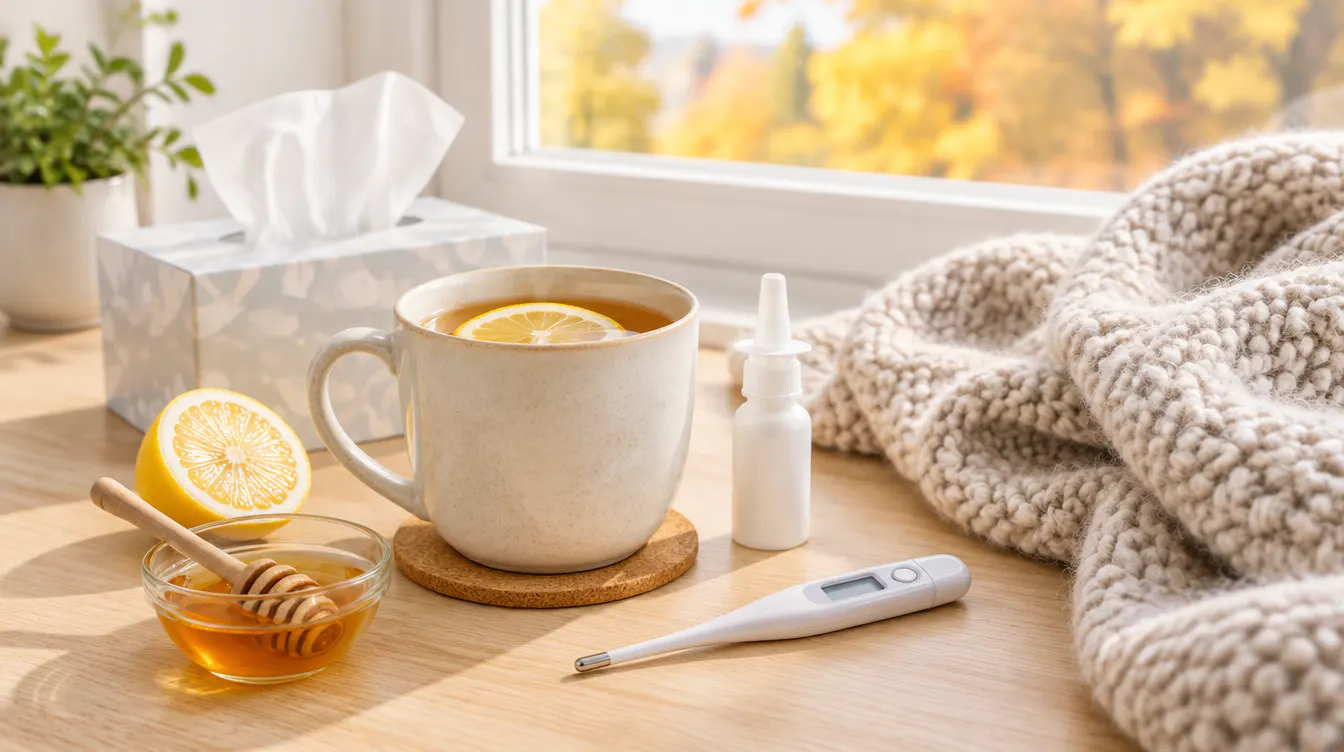
Autumn is the start of cold and flu season. Here is what to keep at home, how to ease the symptoms and when it's time to see a doctor.
Cold or flu?
A cold usually comes on gradually: runny nose, scratchy throat, a mild temperature. Flu starts suddenly: high fever, chills, aching muscles and strong weakness. Both are caused by viruses, so antibiotics don't help.
What to keep in your medicine cabinet
Thermometer
To keep track of the temperature. See How to choose a thermometer.
Fever reducers and painkillers
Paracetamol and ibuprofen bring down a fever and ease pain. Follow the dose in the leaflet for age and weight. Don't take several paracetamol-containing products at once — it is in many cold and flu powders.
- Paracetamol tablets 500 mg №10
- Paracetamol syrup 120 mg/5 ml (for children)
- Nurofen tablets 200 mg №20
Saline nasal sprays
Rinse the nose and make breathing easier. Suitable for children and adults and fine for longer use.
Decongestant drops and sprays
Quickly clear a blocked nose, but use them for no more than 5–7 days — longer use can cause dependence and a chronic runny nose. Children need children's strengths only.
For the throat
Lozenges and sprays soothe a sore, scratchy throat. If the throat is very painful, has white patches or comes with a high fever, see a doctor.
Often asked about
Influcid is a homeopathic product. Antiviral medicines for flu are prescribed by a doctor and work best when started within the first 48 hours.
How to help yourself at home
- Drink plenty of warm fluids: tea, fruit drinks, water.
- Rest and sleep more.
- Air the room and keep the air humid.
- Wash your hands and use disposable tissues so you don't infect others.
When to see a doctor
- The temperature is above 39 °C or lasts more than 3 days.
- Difficulty breathing, chest pain or confusion.
- Signs of dehydration: little urine, dry mouth, strong weakness.
- The patient is a baby under 3 months, pregnant, elderly or has a chronic condition.
- Things got better and then worse again.
Prevention
The most reliable protection against flu is a yearly vaccine, and autumn is a good time to get it. Hand washing, sleep and a varied diet help too. More on vitamins in Magnesium, vitamin D and B12.
Questions? Ask the pharmacist at any ABAPharm pharmacy or write to us in the site chat.
More articles
Skin & Beauty Care
Nicotinic acid for hair: how it works and how to use it
How nicotinic acid for hair works, how to use it and when hair loss is better checked by a doctor.
Health and wellbeing
Allergy: which medicines help and when to see a doctor
Sneezing, a blocked nose and itchy eyes: which medicines help with allergy and when it's time to see a doctor.
Child Care
Diarrhoea in children: what to do at home and when to see a doctor
The main danger of diarrhoea is losing fluid. What to do at home and when to see a doctor urgently.