Diarrhoea in children: what to do at home and when to see a doctor
The main danger of diarrhoea is losing fluid. What to do at home and when to see a doctor urgently.
- Medications
- Baby Care
On this page
Diarrhoea is common in children, especially during stomach-bug season. The main danger isn't the loose stools themselves but losing fluid. Here is what to do at home and when to see a doctor urgently.
Replacing fluid comes first
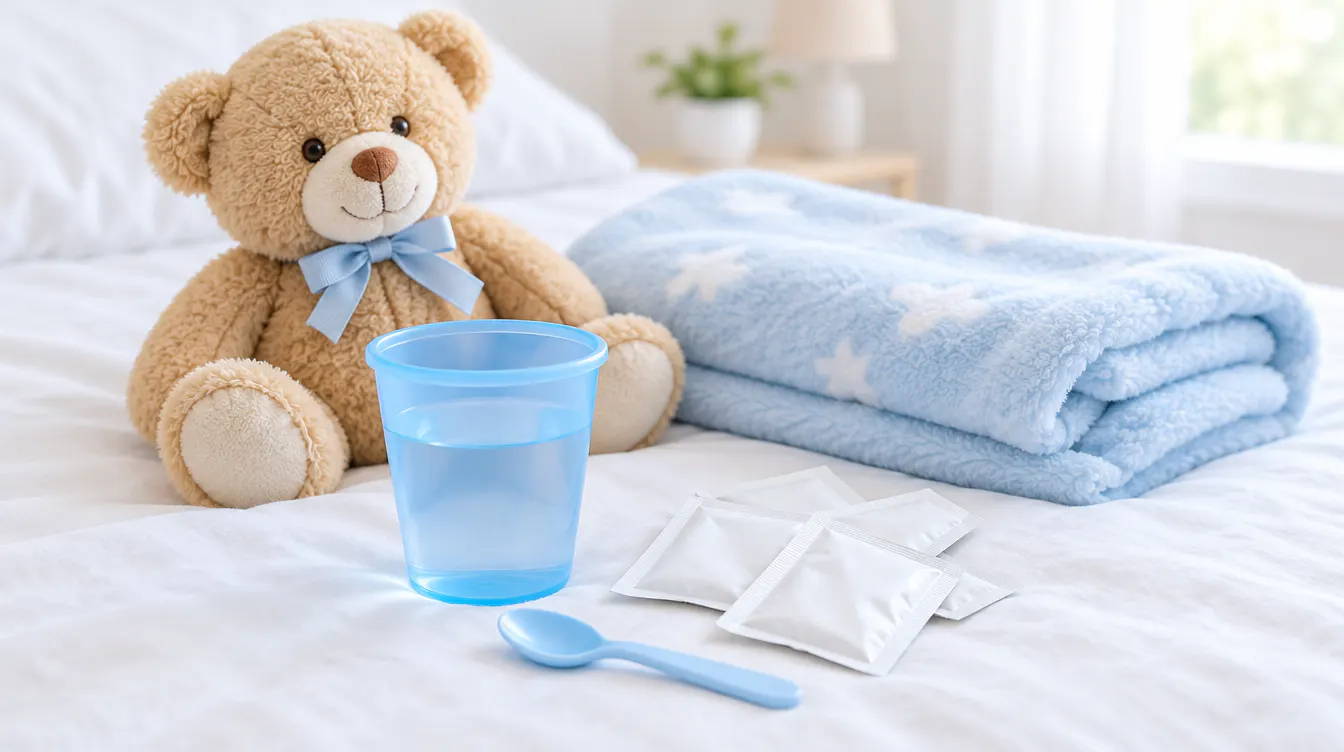
Children, especially young ones, lose water and salts quickly. Treatment is based on oral rehydration solutions. Mix them exactly as the leaflet says and give small sips — if the child feels sick, a teaspoon every few minutes.
- Keep breastfeeding babies, and feed more often than usual.
- Don't replace the solution with juice, fizzy drinks or sweet tea — sugar can make diarrhoea worse.
- Go back to normal food as soon as the child wants to eat.
Adsorbents
Smecta (diosmectite) can reduce how often the child passes stools, but it doesn't replace rehydration. For children under 2, give it only on a paediatrician's advice. Leave 1–2 hours between an adsorbent and other medicines, as it can weaken them.
What not to do
- Don't give children medicines that "stop" the bowel (such as loperamide) unless a doctor prescribes them.
- Don't give antibiotics "just in case": most diarrhoea in children is caused by viruses.
Signs of dehydration
- the child passes little urine, or the nappy stays dry for a long time;
- dry lips and tongue, crying without tears;
- floppiness, strong drowsiness, sunken eyes or a sunken soft spot.
When to see a doctor urgently
- The baby is under 6 months old.
- There are signs of dehydration.
- There is blood in the stool, or the stool is black.
- The child vomits after every sip and can't drink.
- High fever or severe tummy pain.
- The diarrhoea lasts more than 2 days or isn't getting better.
Stopping it spreading
Wash hands with soap often, especially after nappy changes, and give the child their own towel.
Questions? Ask the pharmacist at any ABAPharm pharmacy or write to us in the site chat.
More articles
Health and wellbeing
Probiotics with antibiotics: when they help and how to take them
When antibiotics are really needed, why they cause diarrhoea, which probiotics have the best evidence (S. boulardii, L. rhamnosus GG) and how many hours after the antibiotic to take Linex, Enterol or Enterogermina.
Child Care
Ear pain in children: what to do at night and when to see a doctor
Why a child's ear hurts, what to do right now and at night, when ear drops are safe, whether an ear infection needs antibiotics, what not to do and when to get help urgently.

Cold & Flu
Antivirals for flu: what actually works
Which flu antivirals have strong evidence and which don't: a comparison table on Tamiflu (oseltamivir), Arbidol, Ingavirin, Kagocel, Ergoferon and interferons, who should see a doctor on day one, and what helps everyone.