How to choose a blood pressure monitor and measure at home
Upper-arm, wrist or manual: which blood pressure monitor to choose and how to measure correctly.
- First aid
On this page
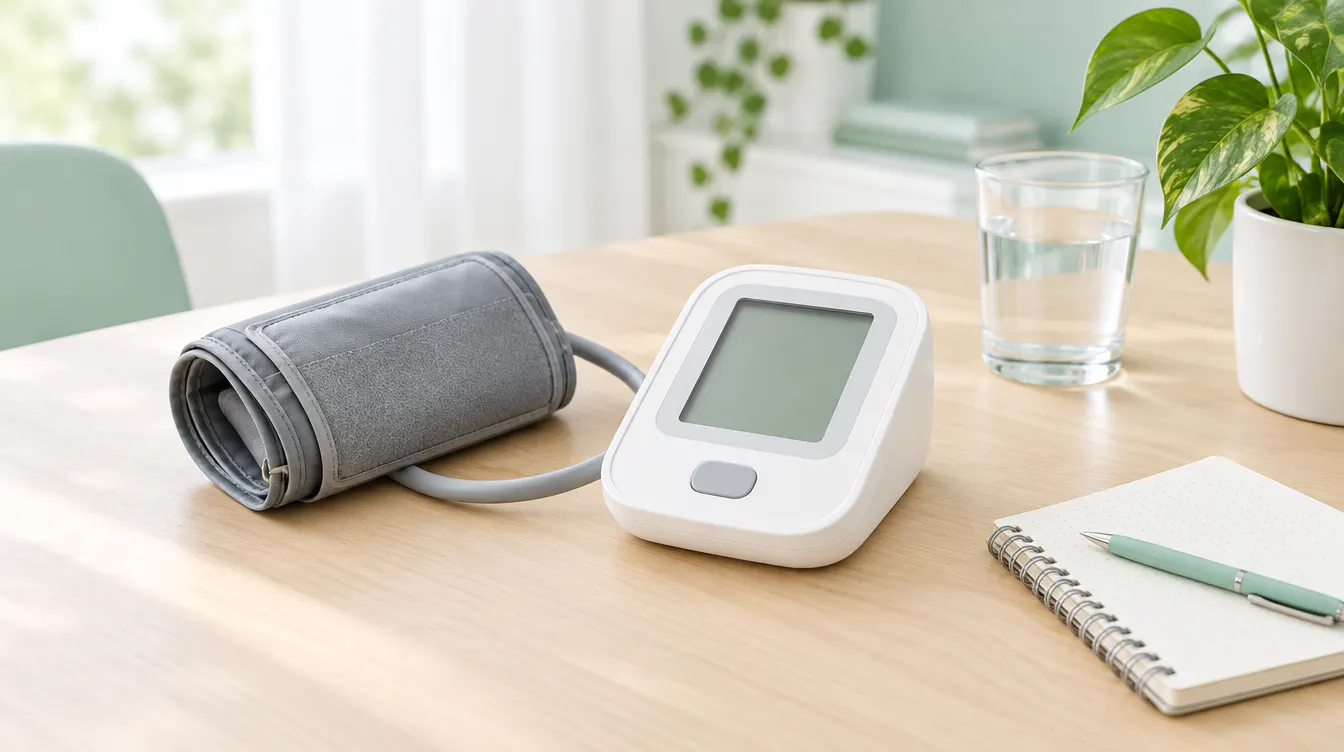
A home blood pressure monitor helps you spot high blood pressure early and gives your doctor the real picture, not just one reading in the surgery. Here is which one to choose and how to measure correctly.
Which monitor to choose
Automatic upper-arm
The most convenient and accurate option for home: the cuff inflates by itself and the result appears on the screen. Suits most people, including older adults.
- A&D UA-780 automatic monitor with adapter
- B.Well PRO-33 automatic monitor with adapter
- A&D UA-888 automatic monitor, M/L cuff
Automatic wrist
Compact and easy to carry. But accuracy depends heavily on arm position: the wrist must be at heart level. A good option if an upper-arm cuff doesn't fit.
Manual
Needs a stethoscope and practice, so it is mostly used by medical staff.
Manual blood pressure monitor with stethoscope
Cuff size
Matters more than the brand. Measure around the middle of your upper arm and check it against the range on the box. A cuff that's too small gives readings that are too high; one that's too big gives readings that are too low.
How to measure correctly
- For 30 minutes before, don't smoke, drink coffee or strong tea, or exercise.
- Sit quietly for 5 minutes with your back supported and legs uncrossed.
- Rest your arm on a table with the cuff at heart level, on bare skin.
- Don't talk during the measurement.
- Take 2 readings 1–2 minutes apart and write both down.
- Measure morning and evening at the same times.
Which numbers are normal
For home readings, aim for below 135/85 mmHg. If your readings are regularly higher, show your notes to a doctor. Don't change the dose of blood pressure medicines on your own.
When you need urgent help
If your blood pressure is 180/120 or higher and you have a severe headache, chest pain, shortness of breath, trouble speaking or seeing, or weakness in an arm or leg, call 103 or 911 straight away.
Not sure which monitor to choose? Ask the pharmacist at any ABAPharm pharmacy or write to us in the site chat. All monitors are in the catalog.
More articles
Health and wellbeing
Probiotics with antibiotics: when they help and how to take them
When antibiotics are really needed, why they cause diarrhoea, which probiotics have the best evidence (S. boulardii, L. rhamnosus GG) and how many hours after the antibiotic to take Linex, Enterol or Enterogermina.
Child Care
Ear pain in children: what to do at night and when to see a doctor
Why a child's ear hurts, what to do right now and at night, when ear drops are safe, whether an ear infection needs antibiotics, what not to do and when to get help urgently.

Cold & Flu
Antivirals for flu: what actually works
Which flu antivirals have strong evidence and which don't: a comparison table on Tamiflu (oseltamivir), Arbidol, Ingavirin, Kagocel, Ergoferon and interferons, who should see a doctor on day one, and what helps everyone.