Ear pain in children: what to do at night and when to see a doctor
Why a child's ear hurts, what to do right now and at night, when ear drops are safe, whether an ear infection needs antibiotics, what not to do and when to get help urgently.
- Medications
- First aid
- Baby Care
On this page
In short: a child's ear most often hurts because of a middle ear infection (acute otitis media) that starts during a cold; it usually gets better on its own within about 3 days. For now, give paracetamol (from 3 months) or ibuprofen (from 3 months and 5 kg) at the dose for your child's weight. Ear drops such as Otipax are only for an intact eardrum, so never use them if anything is leaking from the ear. See a doctor without delay if a baby under 3 months has a temperature of 38 °C or higher, or if a child of any age has discharge from the ear or swelling behind it.
Why a child's ear hurts
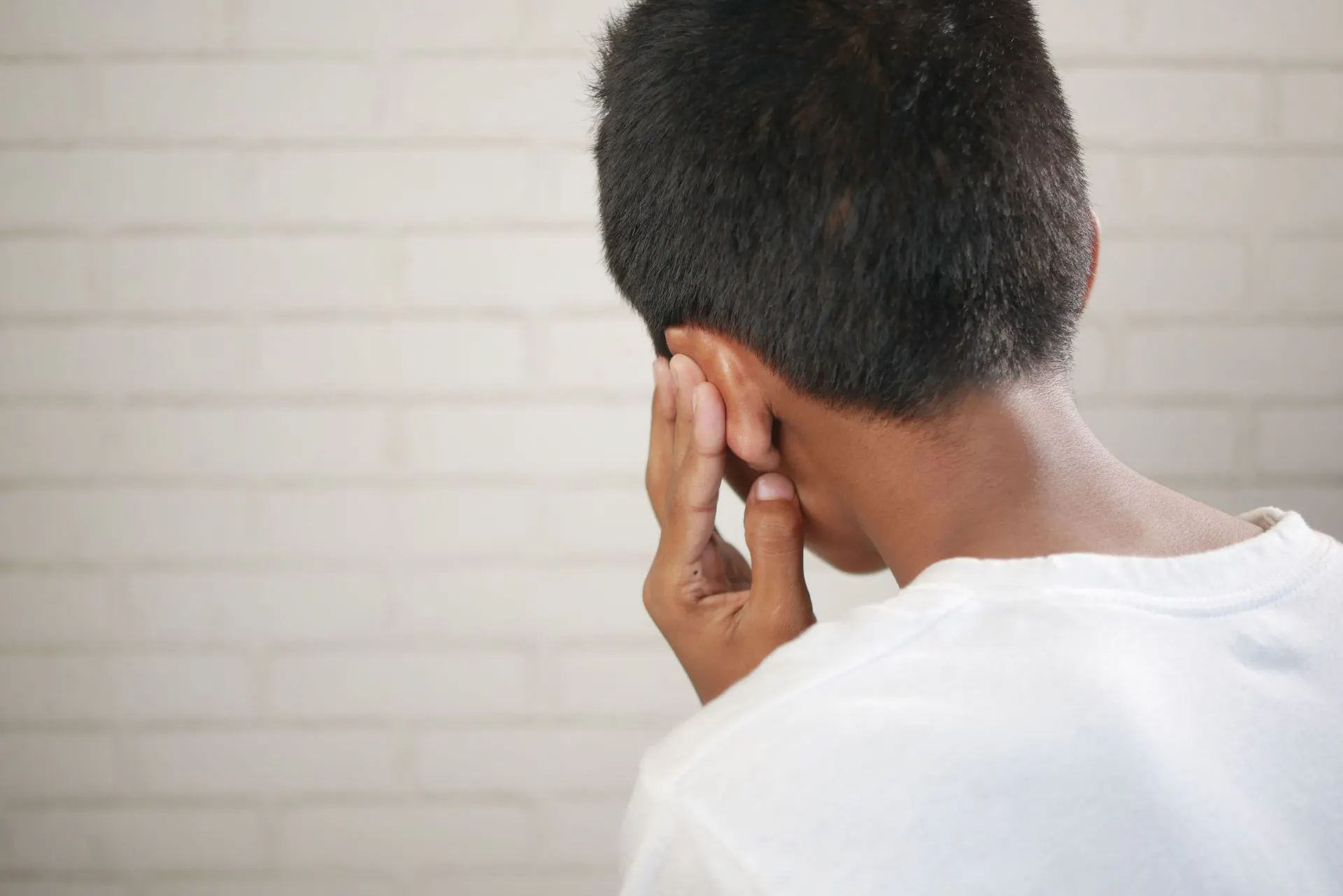
Children get ear infections much more often than adults: the tube between their middle ear and the back of the nose is shorter and more horizontal, so fluid from a cold collects behind the eardrum more easily. A small child may rub or pull the ear, cry, sleep poorly, refuse food, have a temperature, not react to some sounds or lose balance. The pain is often worse at night. But pulling the ear on its own proves nothing: babies also do it to soothe themselves and when teething.
| What you notice | Likely cause | What to do |
|---|---|---|
| Pain during or after a cold, a temperature, crying, poor sleep | Middle ear infection (acute otitis media) | A painkiller by weight; drops only if nothing leaks from the ear; a doctor if the child is under 1 or there's no improvement in 2–3 days |
| Pus, fluid or blood suddenly leaks from the ear | Usually a burst eardrum during a middle ear infection, sometimes an outer ear infection | No drops; keep water out; wipe only the outer ear with cotton wool; see a doctor the same day |
| Itching, redness and swelling in the ear canal, pain when the ear or jaw moves, often after swimming or bathing | Outer ear infection ("swimmer's ear", otitis externa) | Keep the ear dry, give a painkiller and see a doctor: prescription drops are often needed |
| A baby rubs the ear, dribbles, chews everything, has a red gum and a temperature below 38 °C, no cold | Teething | A teething ring and comfort, a painkiller per the leaflet if needed. A temperature of 38 °C or higher isn't caused by teething |
| Ear pain with a sore throat (pain on swallowing) or toothache | Pain spreading from the throat (tonsillitis) or a tooth | A painkiller; a doctor or dentist treats the cause |
| The ear feels blocked, hearing is muffled, little pain, no temperature | Earwax plug or fluid behind the eardrum (glue ear) | Don't dig with cotton buds; a doctor will look in the ear |
What to do right now, including at night
- Give a painkiller, the main remedy for ear pain. Paracetamol: 10–15 mg/kg per dose every 4–6 hours, no more than 4 doses and 60 mg/kg a day. Ibuprofen: 5–10 mg/kg every 6–8 hours, no more than 30 mg/kg a day; don't give it to a child with chickenpox or dehydration (vomiting, diarrhoea, drinking little), and with asthma ask a doctor first. For example, a 12 kg child needs 5–7.5 ml of paracetamol syrup 120 mg/5 ml per dose, or 5 ml of ibuprofen suspension 100 mg/5 ml up to 3 times a day. While the ear hurts, give doses regularly, keeping to the interval and the daily maximum, and measure with the syringe or cup from the pack. Full tables: "Child fever: paracetamol and ibuprofen doses by weight"; how the two medicines differ: "Paracetamol or ibuprofen".
- Check the ear and the pillow. If pus, fluid or blood is leaking, put nothing into the ear, not even drops: wipe the outer ear with clean cotton wool and see a doctor the same day.
- Warmth on the outside. A warm (not hot) cloth held against the ear can ease the pain; don't warm the ear if anything is leaking from it.
- Clear the nose. Saline and a nasal aspirator help a baby with a blocked nose feed and sleep; see "Nose drops for children". Decongestants and antihistamines don't help with an ear infection.
- Drinks and rest. Offer drinks often, keep water and shampoo out of the ear and don't let the child swim until the infection has cleared.
Pain relief for children:
- Paracetamol syrup 120 mg/5 ml, 100 ml
- Nurofen for Children suspension 100 mg/5 ml, strawberry, 100 ml
- Ibufen suspension 100 mg/5 ml, 100 ml
If the child is vomiting or refuses syrup, use paracetamol suppositories and choose the strength by weight, as in the leaflet: Cefecon-D 100 mg for 7–10 kg (1 suppository) or 11–16 kg (1–2 suppositories), 250 mg for 17–30 kg (1 suppository), 2–3 times a day, 4–6 hours apart. A suppository and syrup are the same paracetamol, so their doses add up.
Ear drops: when they're allowed and when they're dangerous
Drops with phenazone and lidocaine (Otipax, Oticaine; Otirelax, Otofix and Otisfen have the same ingredients) relieve pain but don't treat the infection. In Armenia they are sold without a prescription, and the UK NICE guideline suggests them for ear pain when the eardrum is intact and there's no discharge.
- Only with an intact eardrum. The leaflet says to make sure of this before use, and only a doctor can see the eardrum, with an otoscope. Through a hole in the eardrum, the drops reach the middle ear and can cause complications, so it's best to start them after a doctor has examined the ear.
- Never if anything is leaking from the ear, after an ear injury (including from a cotton bud) or if the child has grommets (ear tubes). If discharge appears during treatment, stop the drops and see a doctor.
- Age and dose per the leaflet: Otipax and Oticaine from birth, Otofix from 1 month; 4 drops into the sore ear 2–3 times a day for no more than 10 days. Use an opened bottle of Otipax within 1 month.
- How to put them in: warm the bottle in your hands for a few minutes so the cold liquid doesn't cause discomfort. Lay the child on their side with the sore ear up, gently pull the earlobe, put in the drops and keep the child lying like this for a few minutes.
- Drops with an antibiotic or a steroid are prescription medicines; a doctor chooses them after examining the ear.
Does a child need antibiotics?
Often not straight away. Most children get better within 3 days without antibiotics; according to the American Academy of Pediatrics (AAP), about 80% clear up on their own. Antibiotics don't ease the pain in the first 24 hours, and after that they help about as many children as get side effects from them, mostly diarrhoea and nausea. So doctors often choose watchful waiting: painkillers and a check-up in 48–72 hours, or a back-up prescription to start only if there's no improvement in 3 days or the child gets worse.
An antibiotic is more likely to be prescribed straight away if:
- a child under 2 has an infection in both ears;
- pus is coming from the ear;
- the pain is severe or has lasted 48 hours or more, or the temperature is 39 °C or higher;
- the child is very unwell or at high risk of complications.
Babies under 6 months aren't managed by waiting at home: a doctor must examine them. Give a prescribed antibiotic exactly as directed, for as many days as the doctor said, and don't use antibiotics or ear drops left over from a previous illness.
What not to do
- Don't put cotton buds, fingers or anything else into the ear or try to clean out earwax: it gets pushed deeper, and the ear can be injured.
- Don't drip home remedies into a sore ear: oils (camphor or vegetable), boric alcohol, vodka, garlic or onion juice, breast milk. If the eardrum is damaged, they get into the middle ear.
- No alcohol compresses, hot water bottles, heated salt or lamps on the ear.
- No ear candles: there's no evidence they remove earwax.
- No aspirin for children under 16; don't give paracetamol and ibuprofen at the same time or go over the daily maximum.
When to see a doctor or call 103
Call 103 or go to a hospital emergency department straight away if the child:
- has a stiff neck (can't touch their chest with their chin), light hurts their eyes, or a rash that doesn't fade when you press a clear glass on it;
- is very drowsy, floppy, hard to wake or confused, or has a seizure;
- has swelling, redness or pain behind the ear, or the ear starts to stick out (signs of mastoiditis);
- suddenly has one side of the face drooping.
See a doctor the same day if:
- a baby under 3 months has a temperature of 38 °C or higher;
- the temperature is 39 °C or higher, or the child seems generally unwell;
- pus, fluid or blood is coming from the ear;
- a child under 2 has pain in both ears;
- hearing has changed, or the child is vomiting, dizzy or has a very sore throat;
- something is stuck in the ear;
- the child has a weakened immune system or a long-term illness such as diabetes or a heart, lung, kidney or nervous system disease.
Also see a doctor if a baby under 1 may have an ear infection, the pain hasn't eased in 2–3 days, or ear infections keep coming back.
Frequently asked questions
Can I put Otipax in my child's ear without seeing a doctor?
Otipax is sold without a prescription and is allowed from birth, but its leaflet requires an intact eardrum, which only a doctor can check. Never use it if anything is leaking from the ear or after an ear injury. Until a doctor has examined the child, give paracetamol or ibuprofen by mouth at the dose for their weight.
Does an ear infection always need antibiotics?
No. Most ear infections clear up within about 3 days without antibiotics. A doctor decides after looking in the ear. Antibiotics are more often needed for children under 2 (especially with both ears infected), with discharge from the ear, a high temperature or severe pain. Don't give antibiotics without a prescription.
My baby keeps pulling their ear. Is it an ear infection?
Not necessarily. Babies pull their ears to soothe themselves and when teething. An ear infection is more likely if there is also a runny nose, a temperature, irritability, poor sleep and refusing food. If in doubt, have a doctor look in the ear.
Can a child go to kindergarten or swim with an ear infection?
An ear infection itself isn't contagious, so the child can go back once they feel well and have no temperature, although the cold that started it can spread. No swimming until the infection has cleared, and if the eardrum has burst, until a doctor confirms it has healed.
Sources
- NHS: Earache
- NICE NG91: Otitis media (acute): antimicrobial prescribing
- HealthyChildren.org (American Academy of Pediatrics): Ear infections in children
- Otipax: official leaflet (Vidal, in Russian)
This article doesn't replace a doctor's consultation. Have questions? Ask a pharmacist at any ABAPharm pharmacy or write to us in the site chat.
More articles
Health and wellbeing
Probiotics with antibiotics: when they help and how to take them
When antibiotics are really needed, why they cause diarrhoea, which probiotics have the best evidence (S. boulardii, L. rhamnosus GG) and how many hours after the antibiotic to take Linex, Enterol or Enterogermina.

Cold & Flu
Antivirals for flu: what actually works
Which flu antivirals have strong evidence and which don't: a comparison table on Tamiflu (oseltamivir), Arbidol, Ingavirin, Kagocel, Ergoferon and interferons, who should see a doctor on day one, and what helps everyone.

Cold & Flu
Decongestant nose drops and sprays: how many days, and what to use instead
How xylometazoline, oxymetazoline and naphazoline differ, how many days adults can use them, how to stop rebound congestion, and when saline or steroid sprays fit better.